If you’ve ever stood in a dimly lit basement, fumbling with a tripped electrical panel after a sudden storm, you’ve relied on a device most people never think about—an RCBO, or Residual Current Circuit Breaker with Overcurrent Protection. As someone who’s supplied these devices to electricians, contractors, and homeowners for over a decade, I’ve seen firsthand how this compact piece of safety hardware does more than just “stop a power blip.” It’s the quiet guardian that prevents shock, stops electrical fires, and keeps entire spaces running when other electrical components would fail. Let’s break down where RCBOs work best, why they’re non-negotiable in many settings, and how choosing the right one can save lives and money. Residual Current Circuit Breaker with Overcurrent Protection
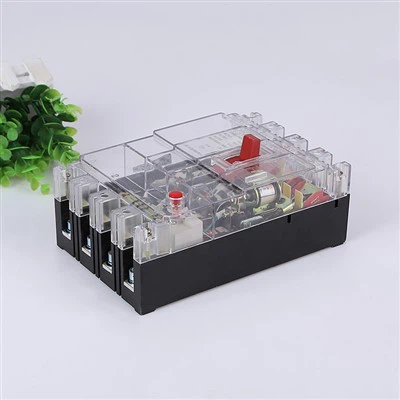
First, it’s important to distinguish RCBOs from similar devices—like circuit breakers and RCDs (Residual Current Devices)—because that’s where most people get confused. A standard overcurrent circuit breaker trips when there’s too much current flowing through a wire, usually from an overload or a short circuit. An RCD trips when it detects a small imbalance in current between the live and neutral wires—think of this as current leaking from the live wire to the ground, which could mean someone is getting a dangerous electric shock. An RCBO combines both functions: it monitors for that tiny leak (as little as 6 milliamps, the level that can cause a fatal shock) and trips for overcurrent too. That dual purpose is why it’s not a “nice-to-have” in certain spaces—it’s a requirement.
Let’s start with residential applications, because that’s where we see the most demand, especially as homeowners upgrade their older electrical systems. For a long time, many homes only had basic circuit breakers, and any ground-fault protection was an afterthought, like the bulky outlets we call GFCI (Ground Fault Circuit Interrupter) sockets in kitchens and bathrooms. But as more homes add outdoor patios, hot tubs, EV chargers, and unfinished basements, RCBOs have become the go-to upgrade. Last year, I worked with a contractor in Ohio renovating a 1950s home that had never had any ground-fault protection outside of the kitchen. By installing RCBOs for the bathroom circuits, outdoor lighting, and the basement workshop, they not only brought the home up to modern electrical codes but also eliminated the nuisance tripping that GFCI outlets cause when you plug in a faulty space heater or a power tool. Unlike individual GFCI sockets, an RCBO protects an entire circuit, so you don’t have to reset every outlet in a bathroom because one hair dryer developed a small leak. It also means if a kid sticks a fork in an outdoor outlet, the RCBO trips before they feel even a tingle—something a standard circuit breaker could never do.
Another residential spot where RCBOs shine is in laundry rooms, especially with high-wattage appliances like washing machines and dryers. Dryers can pull 5,000 watts or more, and their aging wiring is a common cause of both overcurrent fires and small ground leaks from damaged heating elements. A standard breaker might trip during a heavy load, but it won’t catch a leak that’s slow to develop, which can go unnoticed for months until it causes a fire. Last winter, we supplied RCBOs to a homeowner in Texas whose old dryer had a frayed wire that was leaking current to the metal frame. The RCBO tripped at 4 a.m., cutting power before the wire could ignite the nearby laundry detergent bottles and lint pile. The homeowner told us later that he’d had a standard breaker for 10 years and never had a single warning—until that RCBO. That’s the kind of impact I don’t see in product specs; it’s the real-life safety that makes RCBOs worth the investment.
Moving beyond homes, commercial settings are where RCBOs are truly indispensable, and not just because of electrical codes. Take small retail spaces—cafés, corner stores, or boutique shops. These spaces have high load from refrigeration units, POS systems, lighting, and coffee equipment, plus lots of foot traffic and people who might not know electrical safety rules. In a café, for example, the barista is using wet hands to pull shots of espresso, which means any small leak in the espresso machine’s wiring could send a shock. An RCBO will trip in milliseconds if that happens, before the barista even registers a shock. I had a customer who owned a coffee shop in Chicago install RCBOs for all their kitchen circuits after a part-time employee got a mild shock from a faulty grinder. Within a month, the RCBO caught a leak in the milk steamer, preventing a serious injury and a costly lawsuit. For small businesses, RCBOs aren’t just a safety feature—they’re a liability shield that’s required by OSHA (Occupational Safety and Health Administration) rules in many states.
Office buildings are another big market for RCBOs, especially the older ones built before modern electrical standards. Many old offices have shared circuits for multiple rooms, and if one room has a faulty computer charger or a space heater plugged in, it can cause an overload that trips the entire circuit, disrupting work for dozens of people. By installing individual RCBOs per office circuit, companies can isolate faults to a single space, so only one employee loses power, and the rest of the office stays running. We also supply RCBOs for server rooms in small businesses—those spaces have sensitive equipment that can be damaged by even a small power blip or a ground leak. A standard breaker might trip immediately for an overload, causing a server to shut down and lose data, but an RCBO has adjustable tripping times that can handle the inrush current from servers while still catching dangerous leaks. One of our tech customers told us that since switching to RCBOs in their server room, they’ve had zero data loss from electrical faults, compared to three times a year with old breakers.
Industrial and construction settings are where RCBOs have to be tough enough to handle harsh conditions, and that’s a segment we specialize in. Construction sites have temporary power runs, lots of power tools, and workers who are often on wet or muddy ground—all high-risk for electrical shock. Temporary circuits on construction sites used to rely on RCDs, but those don’t handle the overcurrent from heavy tools like jackhammers or circular saws, which means you’d have to reset the RCD every time you start a tool, slowing down work. RCBOs solve that: they have a higher inrush current rating, so they won’t trip when a power tool starts, but they still trip instantly if there’s a leak. We recently supplied 200 RCBOs to a road construction company in Florida working on a project near a lake, where the ground is always damp. The company had been having 2-3 shock incidents a month with old RCDs, and since switching to RCBOs, those incidents are gone—no one has felt a tingle, and they haven’t had to shut down work for unnecessary resets.
Industrial warehouses and factories are another key area. These spaces have heavy machinery, high-voltage equipment, and long runs of wiring that can develop corrosion or damage over time. In a warehouse with heavy equipment, a ground leak might not be enough to trip a standard breaker, but it can still cause a fire if it’s arcing inside a wire. RCBOs detect those low-level leaks, so maintenance teams can fix the wiring before it becomes a hazard. We also supply RCBOs for cold storage warehouses, where low temperatures can make wiring more brittle and prone to damage. A friend who works in cold storage told me that a small leak in a freezer unit’s wiring went undetected for weeks because the standard breaker never tripped—until he noticed a faint burning smell. After we installed RCBOs, the unit developed a new leak last month, and the RCBO tripped immediately, saving the unit and the $100,000 worth of frozen inventory inside.
There are also less obvious applications for RCBOs that I’ve learned about over the years, like in marine settings. Boats have wiring that’s exposed to saltwater, humidity, and movement, which can cause small ground leaks that go unnoticed. RCBOs designed for marine use trip quickly to prevent shock to passengers and damage to the boat’s electrical system. We’ve supplied a number of RCBOs to marinas along the Gulf Coast for dockside power pedestals, too—those pedestals power multiple boats, and a leak in one boat’s wiring could affect others, or shock someone walking on the wet dock. RCBOs isolate that fault, so only the affected boat loses power, and no one else is at risk.
Another growing area is off-grid and solar power systems. Solar arrays have DC current that can leak to ground, and inverters often have high inrush current that can trip standard RCDs. RCBOs for solar systems are calibrated to handle the DC voltage and the fluctuating current from solar panels, protecting both the system and anyone working on it. Last year, we supplied RCBOs to a family in Vermont who installed a small solar system to power their cabin. They had a problem with their old RCD tripping every time the solar panels generated maximum power on sunny days, so switching to an RCBO solved that issue and added shock protection for when they work on the panels.
Now, I want to be clear: not all RCBOs are the same. There are different tripping thresholds, current ratings, and types for different applications, and choosing the wrong one can be just as dangerous as not using one at all. For example, a 6mA tripping threshold is standard for personal shock protection in homes, but industrial settings might use higher thresholds to avoid nuisance tripping from heavy equipment. Marine RCBOs have to be corrosion-resistant, and solar RCBOs have to handle DC voltage. That’s why as a supplier, we don’t just ship generic RCBOs—we work with our customers to match the right model to their specific space. Last year, we had a customer who installed RCBOs for a swimming pool, which requires a 10mA threshold to protect swimmers, and we made sure they got the exact model designed for pool environments, not a generic residential one.
I’ve been in this business long enough to know that many people see electrical safety as a hassle, or something you only worry about after something goes wrong. But RCBOs are different—they work quietly, every day, to prevent problems before they start. I’ve met homeowners who never even knew they had an RCBO until we checked their panel, and business owners who didn’t realize how much money they were losing to unplanned downtime from nuisance tripping. That’s why I’m so passionate about these devices: they’re affordable, reliable, and they make a tangible difference in people’s lives.
If you’re upgrading your home’s electrical system, outfitting a commercial space, or need safety devices for an industrial or construction site, RCBOs should be at the top of your list. They’re not a replacement for good wiring or regular electrical inspections, but they’re the critical layer of safety that catches the things older devices miss. Whether you’re a contractor looking to bring a project up to code, a homeowner wanting to protect your family, or a business owner focused on avoiding risk, investing in high-quality RCBOs is one of the smartest decisions you can make.

We work with electricians, contractors, facility managers, and homeowners across the country to supply the right RCBOs for every application, with expert support to make sure they’re installed correctly. If you’re looking to upgrade your electrical safety, or want to learn more about how RCBOs can benefit your space, reach out to our team to discuss your needs and find the right solution.
Residual Current Circuit Breaker with Overcurrent Protection References
- International Electrotechnical Commission. (2018). IEC 61009-1: Residual current operated circuit-breakers with integral overcurrent protection for household and similar uses (RCBOs) — Part 1: Rules for operation.
- Occupational Safety and Health Administration. (2022). Electrical Safety Standards in the General Industry. U.S. Department of Labor.
- National Fire Protection Association. (2021). NFPA 70: National Electrical Code.
Zhejiang Westroom Electric Co., Ltd.
As one of the leading residual current circuit breaker with overcurrent protection manufacturers and suppliers in China, we have world-leading production equipment and strong manufacturing capabilities. Please feel free to wholesale advanced residual current circuit breaker with overcurrent protection at competitive price from our factory.
Address: No. 22, Enze Road, Xiangbei Village, Liushi Town, Yueqing City, Wenzhou City, Zhejiang Province
E-mail: Zjxfdq15105772211@126.com
WebSite: https://www.westroomdianqi.com/
