When I first started selling high-pressure mist generators a dozen years ago, I heard the same question more times than I can count: “Can you build this thing exactly how we need it?” Back then, I’d hem and haw a little, explain that our standard units worked great for most applications, and maybe suggest a few small tweaks. Today, I don’t hesitate for a second to answer: Yes, every single one of our high-pressure mist generators can be customized. I’ve watched clients take our baseline products and turn them into solutions for everything from cooling massive industrial data centers to keeping racehorses comfortable on hot summer days, and that’s the part of this business that keeps me showing up at the shop before 6 a.m. every weekday. High Pressure Mist Generator
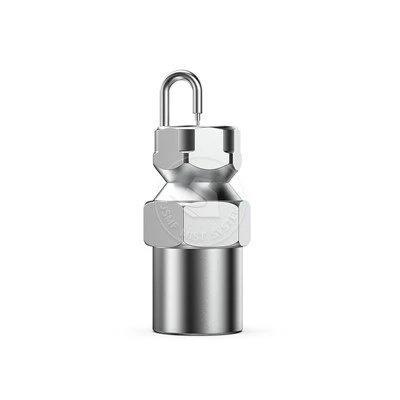
Let’s start with the basics, because a lot of people don’t realize that “custom” isn’t just a buzzword we throw around to make sales. A high-pressure mist generator is more than just a pump and a few nozzles—it’s a system, and every piece of that system can be adjusted to fit a specific space, environment, or need. Take flow rate, for example. Our standard units come in 5-gallon-per-minute (GPM) and 10-GPM configurations, but we’ve built ones that push just 1 GPM for small rooftop patios where you don’t want water pooling on outdoor furniture, and ones that crank out 20 GPM for steel mills where the air temp hits 110 degrees Fahrenheit and workers need constant, heavy-duty cooling. That’s not just turning a dial— that’s swapping out pump heads, adjusting pressure regulators, and calibrating the whole system so it doesn’t waste water or overcool an area that doesn’t need it.
Then there are nozzles, and this is where a lot of clients come to us with specific problems they can’t solve with generic nozzles. Standard nozzles create mist that’s 10 to 20 microns in size—perfect for evaporative cooling because that tiny water droplet evaporates almost instantly, carrying heat away with it. But what if you need mist for something other than cooling? We once worked with a local botanical garden that wanted misting systems to keep tropical ferns hydrated in their open-air conservatory. Generic nozzles would blast droplets so big they would drench the fern leaves and cause mold, or so fine that the wind would carry the mist all the way to the garden’s parking lot. We swapped in 5-micron nozzles that held their droplet size just enough to settle on the fern fronds without pooling, and added a wind sensor that would shut the system off when gusts hit more than 10 miles per hour. That’s custom work, and it’s the kind of thing you can only do if your supplier is willing to sit down and listen to what the client actually needs, not just sell them a one-size-fits-all unit.
Pressure is another big part of customization. Most of our standard generators run at 1,000 PSI, which is the sweet spot for most cooling and humidification applications. But we’ve built systems that run at 500 PSI for paper mills, where too much pressure could damage delicate paper rolls, and 1,500 PSI for dust control at construction sites, where the mist needs to be heavy enough to knock down fine silica dust before it gets into the air. We even had a client who needed a system that would switch pressure levels automatically—high pressure for cooling during the day, low pressure for a light mist to keep plants hydrated at night—so we added a programmable logic controller (PLC) that adjusts pressure based on time of day and ambient temperature. That’s not a standard feature on any of our catalog units, but it’s become one of our most requested custom add-ons in the last five years.
I think what surprises most people, though, is that customization isn’t just about parts. It’s about fitting the system to the space it’s going into, especially when that space has unique constraints. Last year, we worked with a shopping mall in downtown Chicago that wanted a misting system for their outdoor pedestrian plaza. The problem? The plaza is crisscrossed with utility lines, so we couldn’t run the standard ½-inch tubing we use for most systems. We had to swap in ¼-inch stainless steel tubing that fit through the narrow gaps between pipes, and add extra nozzles spaced closer together to make up for the smaller tubing’s lower flow rate. We also had to build a weatherproof control cabinet that would fit in a 12-inch electrical closet, because the mall didn’t have room for a standard-sized control box. That’s not something you can get off a shelf, and it’s the kind of custom work that makes our clients come back year after year when they have new projects.
Safety is another area where customization matters a lot, especially for industrial clients. A few years ago, a manufacturing plant that works with flammable chemicals reached out to us because generic mist generators posed a risk of electrical sparks or leaks that could cause fires. We worked with their engineering team to build an explosion-proof generator—sealed components that can’t spark, leak-proof connections for the tubing, and a system that shuts off automatically if pressure drops below a safe level. We also added a remote monitoring feature so the plant’s safety team could check the system from their control room, no need to send someone out to the equipment floor every hour. That unit cost a little more than a standard generator, but it was worth every penny for a client that can’t afford any safety risks.
I’ve seen a lot of suppliers act like customization is a hassle—something that takes extra time, costs more, and isn’t worth the effort. For me, it’s the whole reason I started this business. I got into high-pressure mist systems because I saw how they could make a difference—for workers, for businesses, for people just trying to enjoy their outdoor space. But one size never fits all, and if I’m selling a unit that doesn’t fit a client’s specific needs, I’m not doing my job right.
Don’t get me wrong, our standard units are great. We sell hundreds of them every year to restaurants, gyms, and small businesses that don’t need anything extra. But when a client walks in or calls with a problem that a standard unit can’t solve, we don’t turn them away. We sit down, we ask questions, we take notes, and we build something that works for them. That could mean something as simple as adding a longer power cord so the generator can be placed farther from an outlet, or something as complex as integrating the mist system with a building’s existing HVAC network. Either way, it’s customization, and it’s what sets us apart from the big box suppliers that just sell catalog units.
I’ll be honest, there are challenges. Custom work takes longer—usually 1 to 2 weeks, compared to 2 to 3 days for a standard unit. Sometimes we have to source parts that aren’t in stock, or adjust a design mid-build when a client realizes their needs changed. But that’s part of the process, and my team and I are used to it. We don’t cut corners, and we don’t promise something we can’t deliver. Every custom unit we build goes through the same testing as our standard ones—we run them for 24 hours straight, check for leaks, calibrate flow rates and pressure, and make sure they’ll work as expected in the real world.
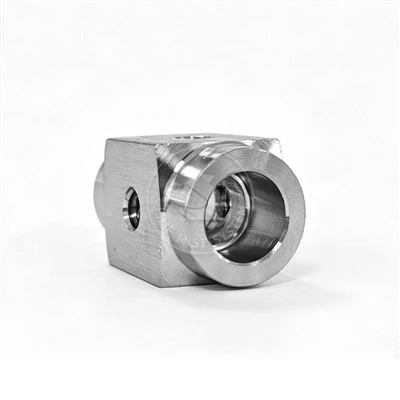
If you’re reading this, and you’ve been wondering if your high-pressure mist need is something we can build for you, the answer is almost certainly yes. Whether you need a small system for a backyard patio, a massive system for a warehouse, something safe for an industrial site, or something that fits into a tight, unique space, we can customize it. We don’t have a one-size-fits-all approach, because we know every client’s needs are different.
Mist Generator If you’re ready to talk about your project, reach out to us to start a conversation. We’ll listen to what you need, answer any questions you have, and work with you to build a high-pressure mist generator that fits exactly what you’re looking for.
References
- ASHRAE. (2021). 2021 ASHRAE Handbook—HVAC Systems and Equipment. American Society of Heating, Refrigerating and Air-Conditioning Engineers.
- Occupational Safety and Health Administration (OSHA). (2020). Safety and Health Regulations for General Industry. U.S. Department of Labor.
- International Society of Automation (ISA). (2019). ISA-88: Batch Control Standard. International Society of Automation.
- Mist and Evaporative Cooling Association (MECA). (2022). Best Practices for Custom High-Pressure Misting Systems. MECA Technical Bulletin Series.
- National Fire Protection Association (NFPA). (2021). NFPA 70: National Electrical Code. National Fire Protection Association.
Jinsheng Mist Forest-High Pressure Mist System
Address: 109 Yonghong Road, Wenjiang District, Chengdu City, Sichuan Province, China
E-mail: 18190767523@163.com
WebSite: https://www.jswsmist.com/
